

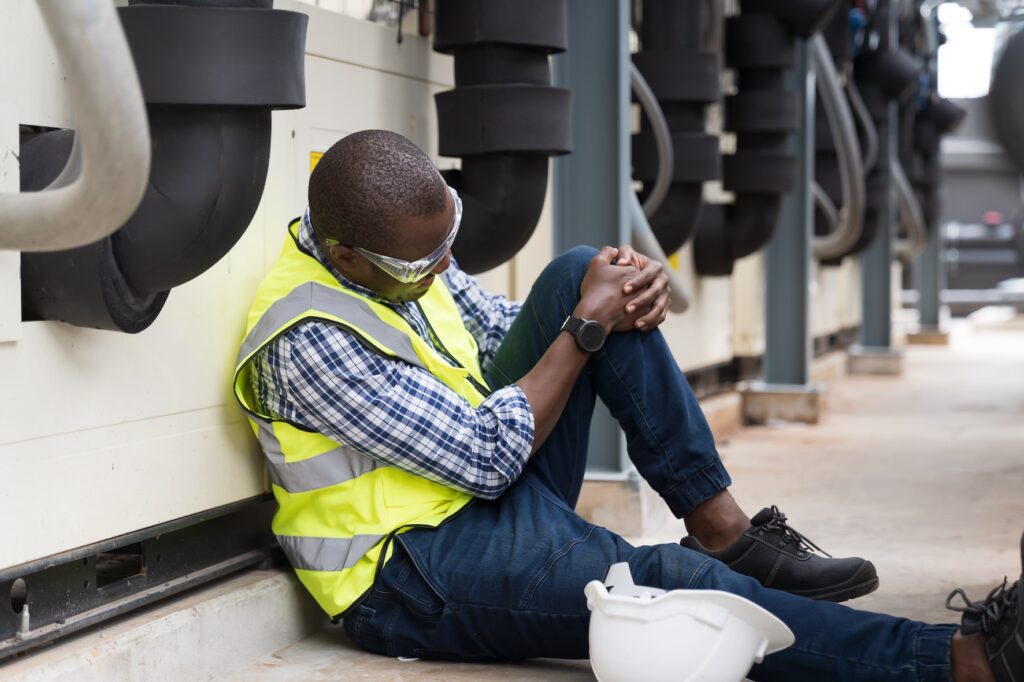
Falls are one of the most common causes of serious injury at work, particularly for employees working in isolation. A worker who slips, trips, or collapses while alone may be unable to call for help. They could be unconscious, injured, or simply too disoriented to reach a phone. Fall detection technology bridges this critical gap by automatically raising an alarm the moment a fall occurs, without the worker needing to do anything.
Modern fall detection works through a combination of sensors built into the lone worker device. Accelerometers measure sudden changes in velocity, gyroscopes track orientation, and intelligent algorithms analyse the data in real time. When the device detects the unique pattern of a fall — a rapid downward movement followed by impact and stillness — it triggers an alert automatically.
What happens next depends on the device and the monitoring service. On most modern systems, the wearer is first given a short countdown to cancel the alarm in case of a false alarm, such as dropping the device. If no cancellation is received, the alarm is escalated. The device then connects to a 24/7 monitoring centre, where a trained operator can speak to the wearer through the device. If there is no response, or if the wearer confirms an emergency, the operator dispatches help and notifies designated contacts.
Fall detection is particularly valuable for workers at heights, those carrying heavy equipment, lone drivers, healthcare staff, elderly support workers, and anyone with a medical condition that increases fall risk. It also serves employees in physically demanding roles where exhaustion or loss of footing is a daily possibility.
It is important to remember that no fall detection technology is perfect. Some falls — particularly slow, controlled descents — may not trigger the sensors. False alarms can also occur with sudden movements. This is why fall detection should always be combined with a one-touch SOS button, two-way voice communication, and GPS tracking, so workers have multiple ways to summon help and responders can locate them quickly.
For employers, enabling fall detection on lone worker devices is one of the simplest ways to dramatically reduce the response time during an emergency. Combined with a well-trained monitoring centre and clear internal procedures, it can be the difference between a near-miss and a fatality.
When choosing a lone worker solution, ask the provider about the specific fall detection algorithm used, the false alarm rate, and how cancellation works. Not all systems are equal, and the quality of the technology directly affects your team’s safety.